Japan returns to whale hunting?
Japan is one of the richest countries in the world, and I think is the place where people live the longest. Therefore, it is a developed country that participates in the global market and doesn’t need to hunt in order to survive.
Traditionally, a big part of all the meat the Japanese ate was whale meat. After World War Two the number of hunted specimens had increased a lot, and on 1982 Japan officially stopped hunting whales with commercial aim. Despite this, it is a known fact that they took advantage of a special agreement that allowed some countries to hunt whales with a scientific aim: they ended selling them as meat. Now they have left the International Whale Commission and some ships have already left to hunt those huge mammals.
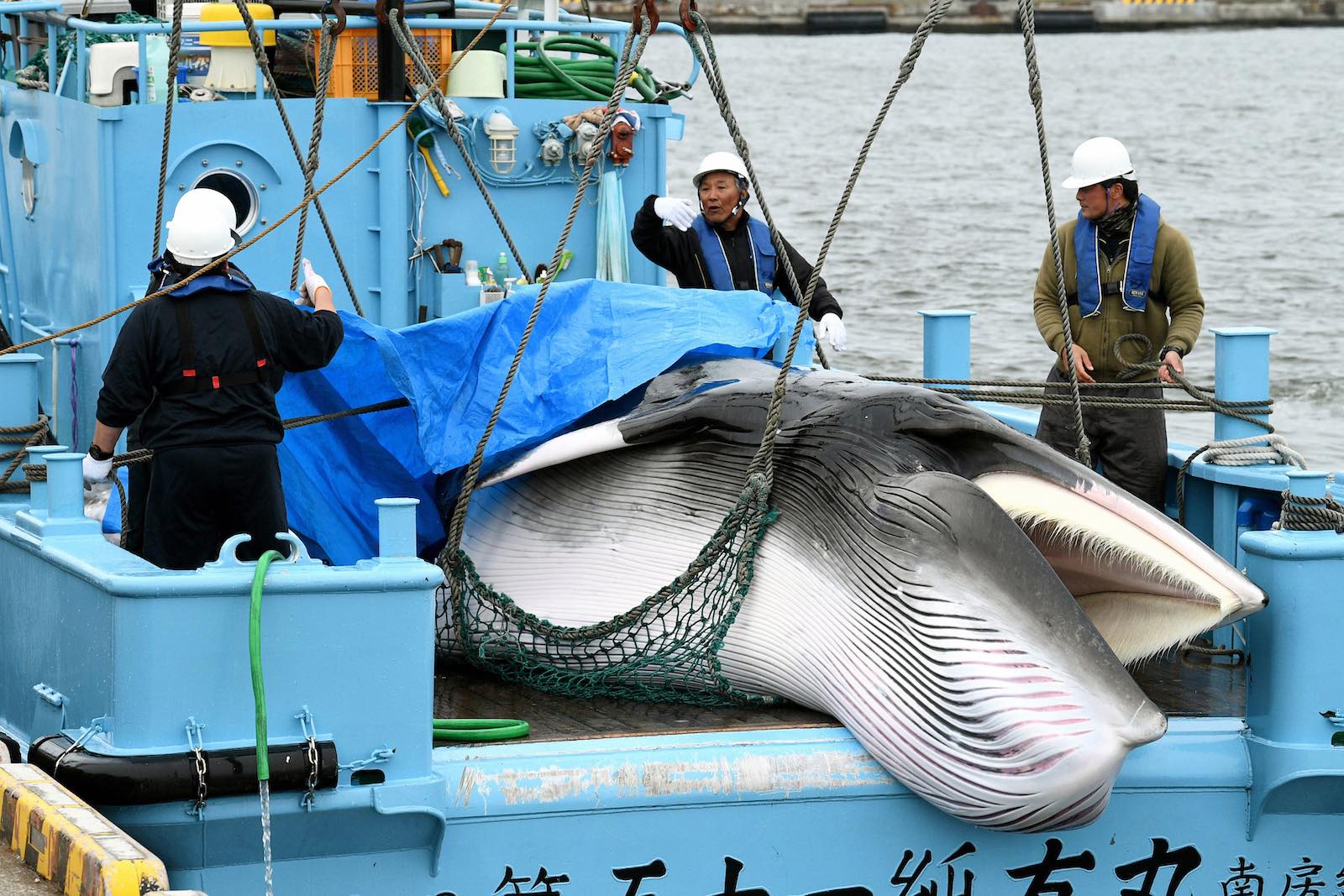
They have said the hunt will be under the one percent of the whole whale population, but I wonder how many years do whales spend to reach adult, because maybe one percent is a lot considering this species. When I first read the article I felt OK about with this because it did not seem unsustainable and harmful for the whales, but then I thought that it could not be that perfect. If Japan inhabitants are going to eat whales again, just the natural population of this animals won’t be enough; besides, they can try to carry with them other countries; that could result to another whale massacre.
Whales, like lots of other species, are yet affected by the human presence on the Earth, especially because of the climate change and plastics. To add other dangerous activities to the previous ones will be, for sure, bad for the species. Whales are the biggest animals in the world, that implies a slow vital cycle and adaptation to the environmental changes. This is the kind of animal that will be extinct soon if no one cares about protecting it, because most of the people only hear about them when it is too late. The only organization I’ve heard that acts against whale hunting is Greenpeace, now is collecting firms against Japan decision and then in 2006 also went to the Antarctic ocean to stop japanese ships hunting whales with “scientific aim”. Here we have a short story of their fight:
Our society is so globalized and so big that we have to be careful and aware of the consequences of our actions, because millions of people are doing them at the same time as we, and the impact may be huge. This happens with plastics, with aliments like avocados, sushi or tuna, with tourism etc. Often we have seen that states do not mind about the environment or keeping the Earth as it was given to us, and I’m afraid this case is on the way to join the list.

 SUMMER NEWS BLOG